The Public Bench: Rest, Meeting Point, or Obstacle?
Public bench placement can help people pause without constricting shared routes. Compare approaches, sightlines, shade, and site conditions before selecting a candidate.
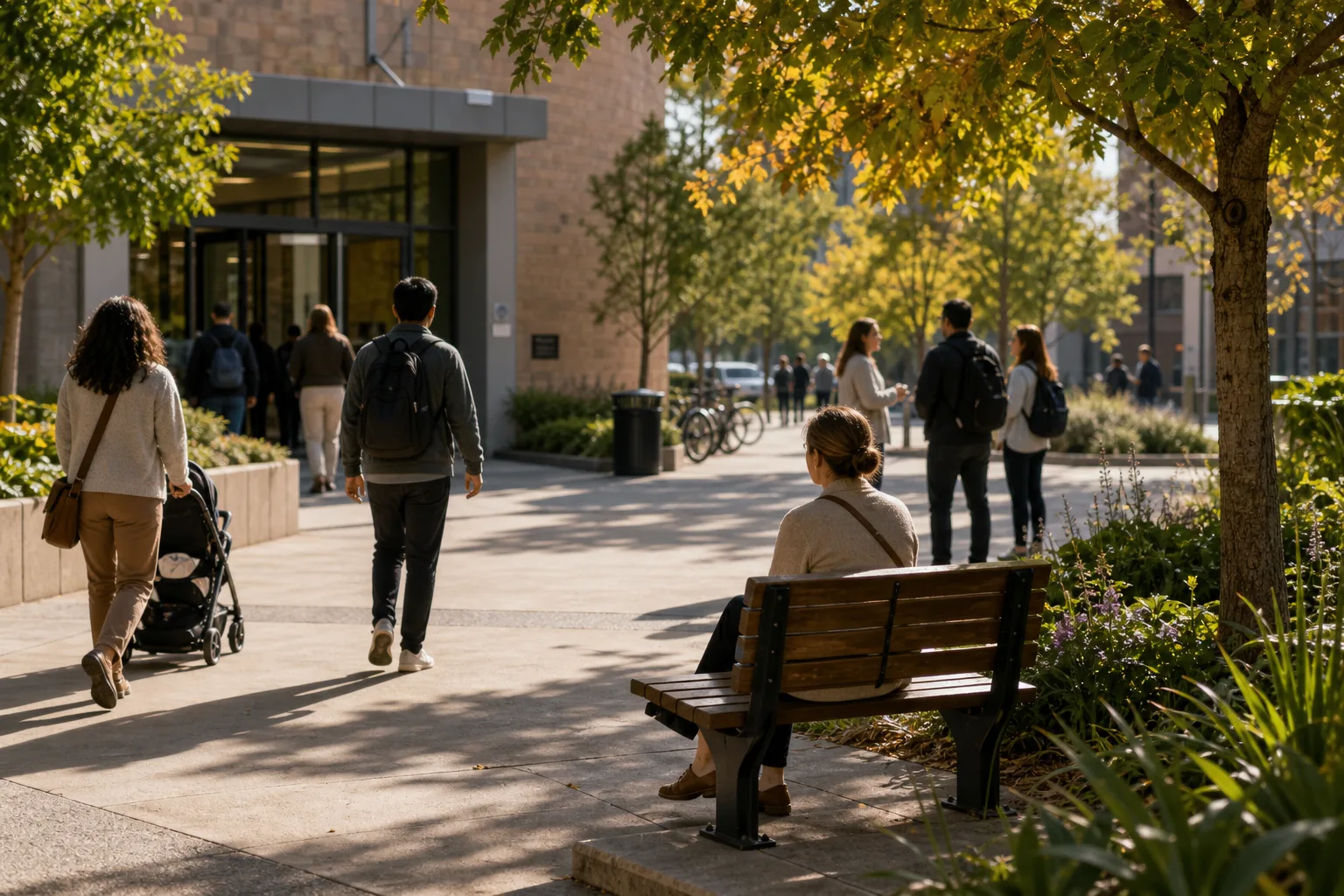
Where can a public bench offer a useful pause without narrowing the way through? Public bench placement starts with the routes people already use, then considers how a seat’s position and direction may change them.
Walk-throughs can reveal patterns in foot traffic, shade, and waiting. They cannot establish accessibility compliance or prove that a proposed layout will work for everyone. Treat observations as planning clues, then have the applicable local requirements and site-specific recommendations checked by the responsible authority or a qualified design professional before installation.
Map the routes
Walk the space at different times. Note entrances, crossings, informal shortcuts, and places where people slow down. Look at the route from several approaches, including the path someone might take with a stroller, wheeled bag, or mobility aid.
Mark pinch points such as gates, corners, and narrow links between paths. Consider the whole bench area, not just the seat: people need room to approach, sit, stand, and move alongside it. A site plan can help record these features, but it does not replace a site review.
If you cannot visit at varied times, ask nearby staff when the space is busiest. Use their answer to choose another observation time, rather than treating it as a substitute for a walk-through.
Observe approaches
Watch how people reach existing seats. Do they approach from the side, wait behind someone, or cross a path to get to a shaded spot? Note recurring patterns without recording or identifying individuals.
Look for objects that complicate the route: a signpost, planting bed, curb, bin, or table. A seat that appears open from one direction may be awkward to reach from another.
Say a library proposes a bench near its entrance. In this invented planning scenario, the starting observation is that people wait there while others repeatedly pass through the same approach. The team sketches a nearby edge position, traces how it connects to the entrance and passing routes, and compares the two locations. If the sketch shows that waiting and through-movement no longer overlap, the edge position becomes a candidate for professional review; if they still overlap, the team considers another location. Neither result determines accessibility compliance.
Compare seat directions
Sketch the bench as a rectangle and draw the paths around it. Mark the direction people would face. A seat aimed at a garden may invite quiet looking; one facing a path may help someone watch activity or orient themselves.
An angled seat can offer a view without pointing directly into passing traffic. Two seats facing each other may support conversation, while a single seat beside a route may suit someone waiting alone. Preferences vary, so compare the options with the actual setting rather than assuming one arrangement fits everyone.
Check comfort and context
Return at different points in the day. Notice sun, shade, wind, glare, noise, and nearby activity. A spot that feels calm at one time may be exposed or busy at another.
Consider what people may want to see. Someone waiting near a transit stop may value a view toward arriving vehicles; a visitor in a park may want to watch a path without sitting in its flow. Trees can offer shade, but roots, fallen leaves, and low branches may affect the approach and maintenance.
Look at the ground and surrounding space. Slopes, loose surfaces, or obstacles may complicate access. Have the responsible authority or a qualified design professional check applicable local accessibility requirements and site conditions, including the proposed route, clearances, surface, and installation location. Do not treat a visual walk-through as a compliance decision.
Review shared space
Consider how the seat affects people who are not using it. Is there room for a companion to wait nearby? Could a bin, bike rack, or sign interrupt the approach? Does gathering around the bench push people into a path?
Compare the preferred location with a nearby alternative. Record the trade-off: one spot may offer more shade, while another may leave a busier route clearer. These observations can help narrow the options, but they do not establish how a final layout will work for all users.
Public bench placement questions?
Should a bench face the path?
It can make passing activity part of the view and help some people orient themselves. If the path is busy, compare an angled position that preserves a view while sitting farther from the flow.
How should I assess a clear route?
Note where people travel and whether the proposed seat, its users, or nearby objects appear to narrow that route. Ask the responsible authority or a qualified design professional to confirm applicable requirements and site-specific recommendations before installation.
Is a bench near an entrance useful?
It can provide a waiting place, but entrances concentrate movement. Observe how people approach and queue, then compare a position that serves waiting without occupying the entrance route.
What if people use the bench differently?
After installation, observe whether the seat becomes a gathering point or creates a recurring conflict with passing routes. Share concerns with the site manager and ask for a reviewed adjustment if the arrangement causes difficulty.
Choose a candidate
Review your notes and identify a candidate location for further checking. For each item, record what you observe and make the stated decision; an observation is a planning aid, not a compliance finding.
- Observe whether the approach crosses a busy route. If it does, compare a position with a more direct approach; if it does not, keep the candidate for review.
- Observe whether the seat or its users appear to narrow the main path. If they do, change the location or orientation; if they do not, have the route checked against applicable local requirements.
- Observe whether an entrance queue overlaps the seating area. If it does, compare a location away from the queue; if it does not, retain the option while checking door access.
- Observe whether shade, glare, wind, or noise changes during visits. If conditions make the spot less suitable at a relevant time, compare another location; if they do not, include the comfort notes in the review.
- Observe whether a companion or mobility device can be accommodated without entering the passing route. If space appears limited, seek another arrangement and professional review; if it appears workable, ask a qualified professional to verify the required space locally.
- Observe whether signs, bins, roots, or other features obstruct access or maintenance. If they do, adjust the candidate or resolve the conflict; if they do not, include upkeep in the installation review.
Once a location is selected for review, keep that decision separate from the walk-through: observations help compare options, while the installation plan still needs appropriate accessibility and site checks. After installation, make a distinct follow-up visit during a busy period. Note any new obstruction or awkward approach, then refer needed changes to the site manager and, where relevant, the responsible authority or a qualified design professional.
Public bench placement need not put the seat at the center of attention. A useful location gives people a reason to pause while leaving the shared route legible. Before approving the installation, make sure the final position—not just the sketch—has received the appropriate local and site-specific review.
Nearby questions
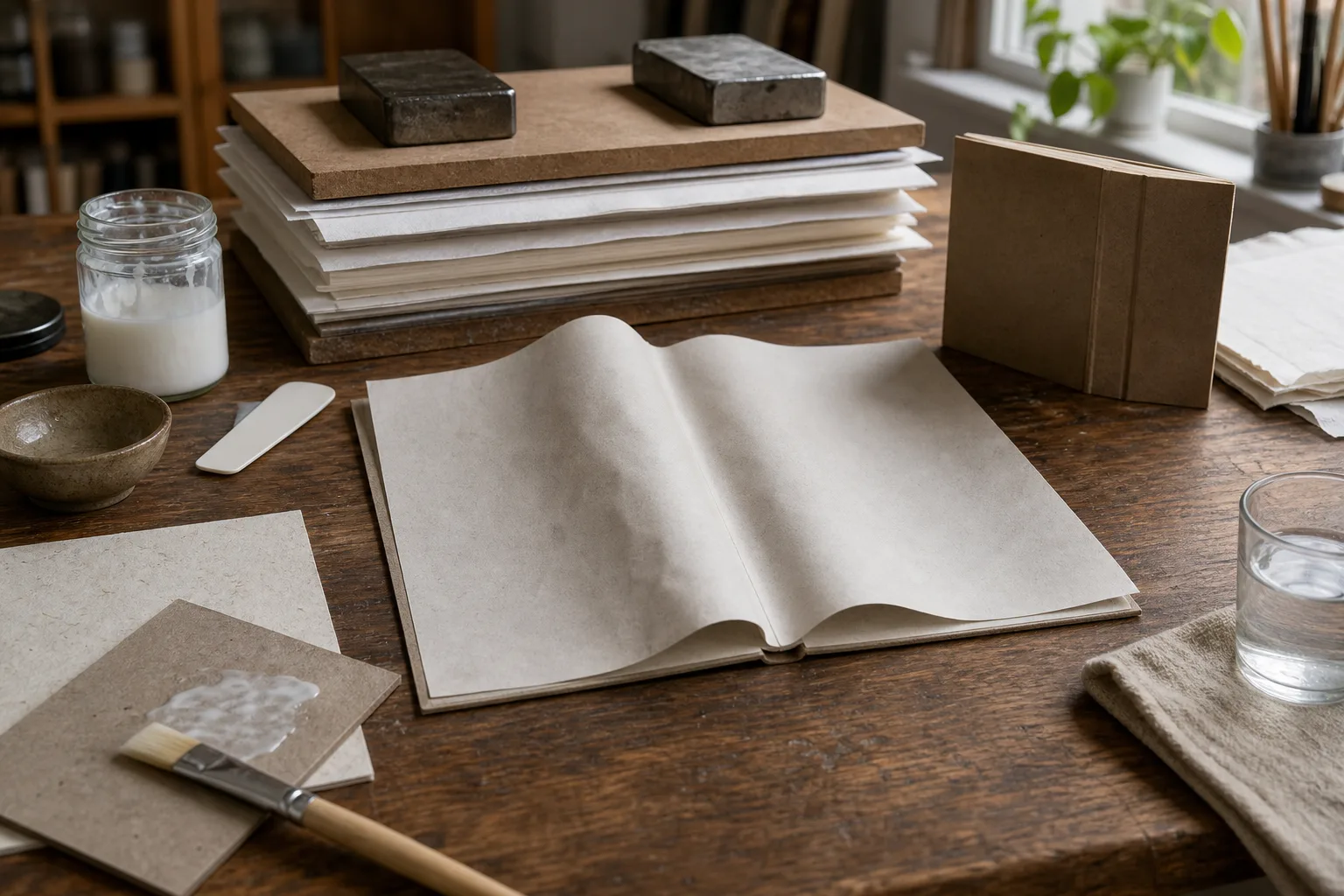
Why Paper Buckles When Glue Dries
Why paper buckles when glue dries—and how grain, adhesive, and gentle pressing can help a bonded…
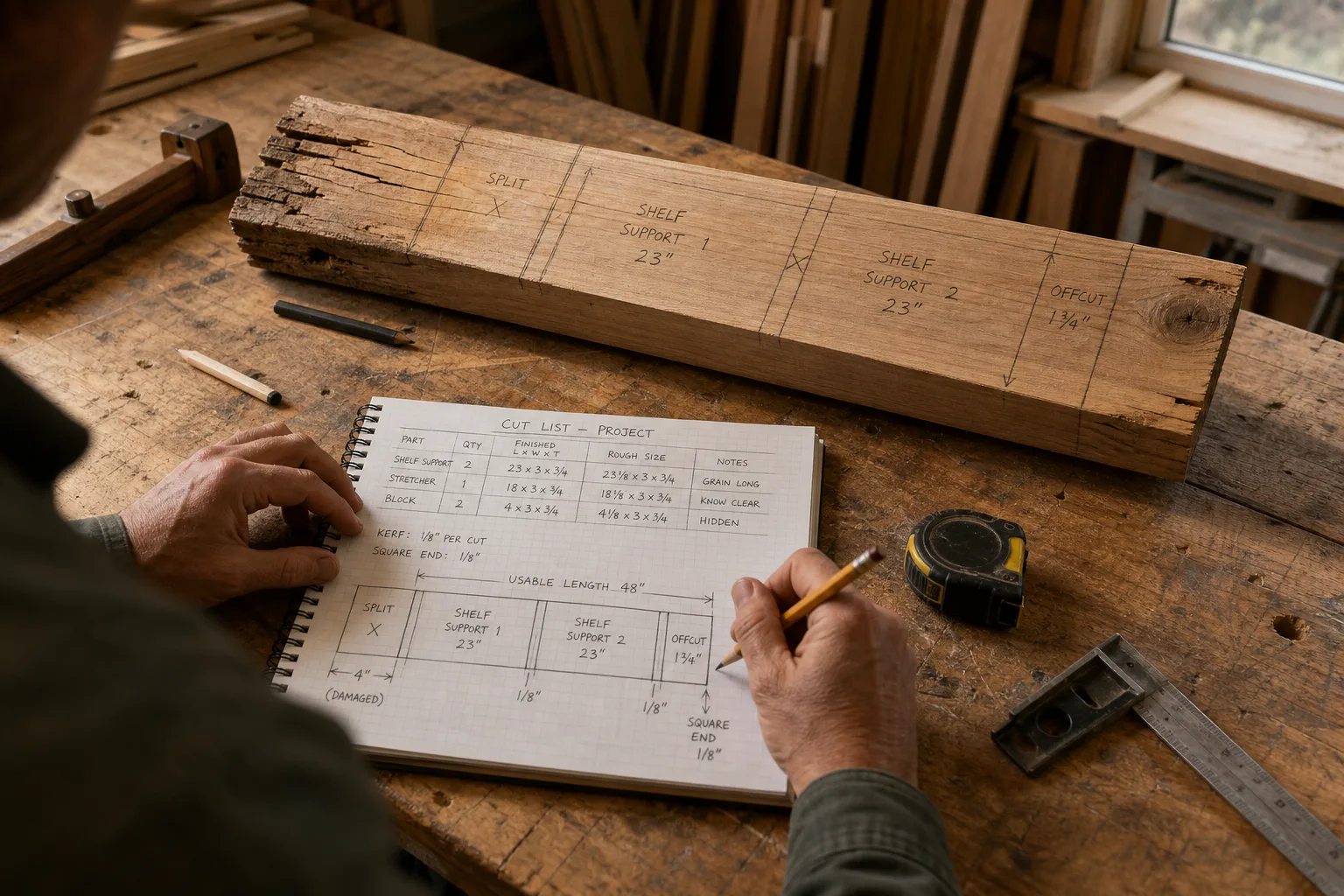
The Cut List That Saves the Last Good Board
A woodworking cut list helps fit parts to usable stock, account for kerf and defects, and…