A Door Handle Is a Small Study in Leverage
Door handle leverage explains how grip, position, and clearance affect a door’s movement, helping you choose hardware that suits its users and setting.
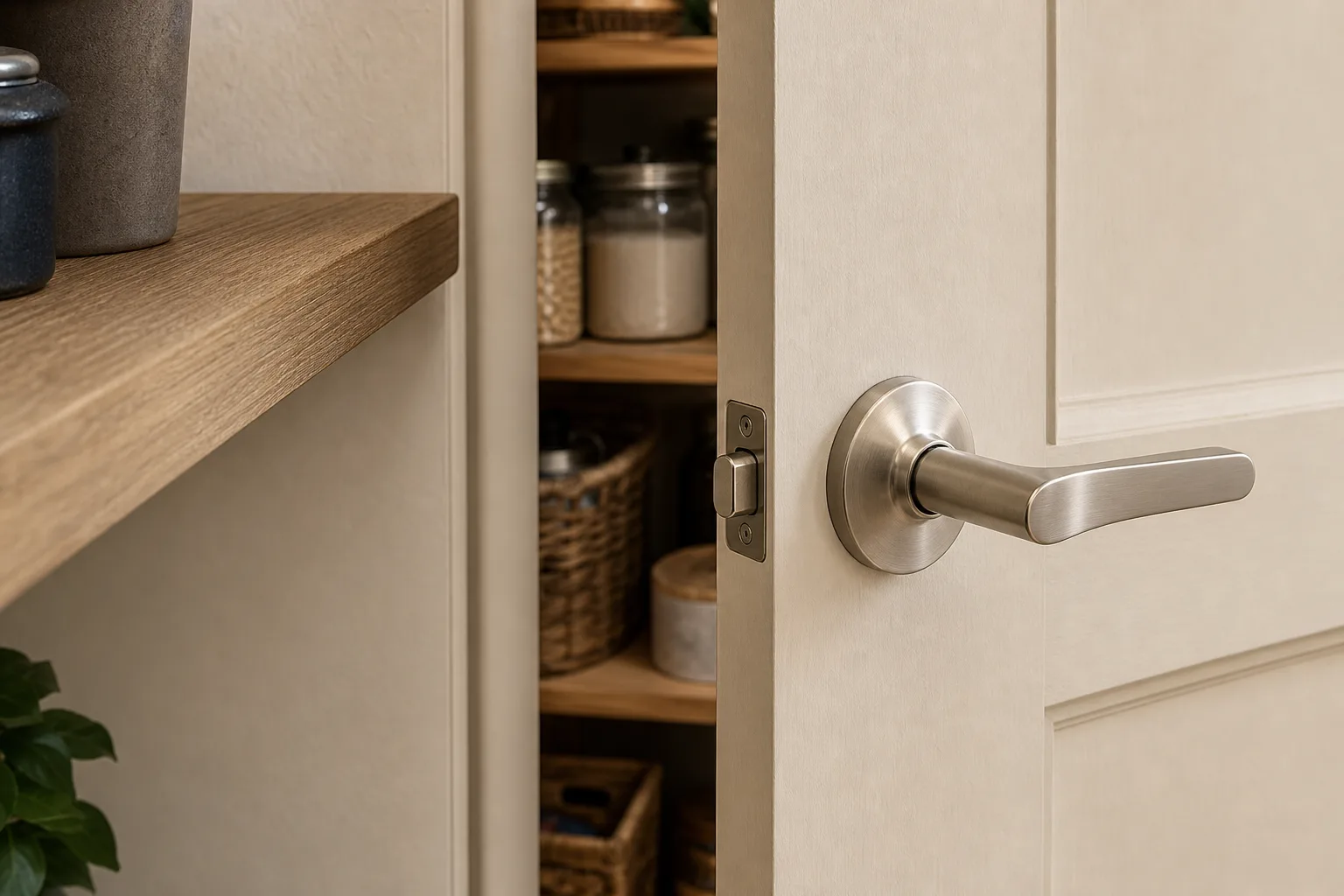
Why does one door open with a fingertip while another demands a twist, a shove, and a search for the right grip? Door handle leverage helps explain the turning part: the handle gives your hand a way to rotate the spindle that moves the latch. Its shape and distance from that turning point change how the motion feels.
That small mechanism connects a hand to a building. The lever turns the spindle; the latch retracts; then the door swings on its hinges. Knowing which part resists can help you choose a handle—or recognize when the handle is not the problem.
The turning point
In a typical hinged door, a spindle runs through the latch mechanism and connects the handles on both sides. Turning a handle rotates the spindle, retracting the latch so it clears the strike plate on the frame.
The spindle is the lever’s turning point. Your hand supplies force at a distance from it. A longer handle gives your hand a longer lever arm, which generally takes less hand force to create the same turning effect. The tradeoff: your hand travels through a wider arc.
A long lever may make a stiff latch easier to turn, but it can strike a wall or catch clothing. A compact knob occupies less space, yet calls for a firm grasp and a twisting motion. Neither shape suits every door or user. Start by noticing where the hand lands and what movement the door asks for.
Grip shapes
A lever gives the hand an extended surface to press down or lift. Some people may find that easier than closing their fingers around a knob, but comfort depends on the handle’s shape, position, and the person using it. A lever does not by itself make a door accessible or suitable for every user.
A round knob asks the hand to wrap around it and rotate. That requires a secure grip. A small, smooth knob may be difficult to hold with damp hands or bulky gloves; a larger or textured one may feel more secure, but still requires twisting.
Other forms offer different contact points. A T-shaped pull gives fingers a place to hook, while a paddle handle presents a broad face to press. A thumb-turn is a short lever commonly used on privacy hardware. Each shape must match the door’s mechanism and the user’s reach.
Finish affects touch and upkeep. Polished metal is easy to wipe but may feel slippery to damp fingers. Texture can offer more purchase, though deep grooves collect grime. Wood feels different in the hand, and its edge shape and finish matter as much as its material.
Position and effort
Height affects reach and the angle of the arm. A handle placed awkwardly can require a stretch or bend. In a shared space, consider the people who use the door, including children and anyone who approaches while seated. For public or commercial settings, check applicable accessibility rules with a qualified professional; requirements depend on the location and door.
Position across the door matters too. A hand closer to the hinge has less leverage over the door itself than a hand near the latch side. This is separate from the handle’s leverage over the latch: turning the handle retracts the latch, while pushing or pulling rotates the door around its hinges.
That distinction helps locate resistance. A person might turn the handle easily but struggle to move a heavy door, or turn a stiff latch and then swing the door without trouble. The closer, hinges, and seals can affect the door’s movement as well.
Check the approach from both sides. A wall, cabinet, or narrow corridor may block the hand or handle on one side.
Travel and clearance
As a lever turns, its free end follows an arc. It needs room to complete that movement. A long handle may hit trim or a cabinet before the latch retracts. A lever can also catch a sleeve or shoulder in a tight passage. A rounded return at the end may reduce snagging, but the surrounding space should guide the choice.
Some handles are handed: their shape or orientation is intended for a particular side or swing direction. Before selecting one, check the manufacturer’s fitting instructions and confirm the door’s swing. The handle should turn in the intended direction without hitting nearby surfaces.
Say you have an invented pantry scenario: a polished knob sits beside a projecting shelf, and damp hands make it awkward to grasp. You note that the knob clears the shelf but the hand slips; then you compare a compact return lever’s path with the shelf and confirm its orientation against the fitting instructions. If the lever clears the shelf and can be pressed comfortably, it is a plausible option; if its arc strikes the shelf, keep looking for a shape with more clearance.
When the door resists
More leverage may make a stiff latch easier to turn, but it will not realign a door. A latch scraping the strike plate, a sagging door, or a binding hinge points to a problem beyond the handle.
Compare the movement with the door open and closed. If the handle turns smoothly while open but resists when closed, the latch may be meeting the strike plate. If it remains stiff while open, the spindle, latch case, or handle mechanism may be binding. If the door moves freely until the end of its swing, hinges, the frame, a seal, or a closer may be contributing.
Hardware differs in how far the handle must turn before the latch clears. A mismatched spindle or worn latch can create slack or uneven movement. Follow the fitting instructions. If an exit or security door remains difficult to operate, ask a qualified locksmith or carpenter to assess it.
Note whether the resistance happens with the door open, closed, or during the swing; that observation narrows down what to inspect.
A selection check
Before choosing hardware, consider the intended users, the door’s movement, and the space around it. For each item below, check the stated observation and follow the decision that fits what you see.
- Grip: Ask intended users to operate the handle naturally. If it requires a painful twist or tight pinch, consider a pressable lever; otherwise, compare the available shapes for comfort.
- Reach: Observe whether users can reach the handle without stretching or bending. If not, seek a suitable position or hardware arrangement and check applicable requirements; otherwise, keep the position under consideration.
- Clearance: Turn the handle through its full arc beside walls, shelves, and trim. If it hits an obstruction, choose a shorter or differently shaped handle; otherwise, retain it as an option.
- Travel: Check whether the handle retracts the latch before reaching an awkward wrist angle or obstruction. If not, inspect compatibility and consider another handle; otherwise, proceed to check the door’s swing.
- Fit: Compare the spindle, latch, door orientation, and fitting instructions. If they do not match, choose compatible hardware or ask a qualified installer; otherwise, continue evaluating the grip and clearance.
- Surface: Feel the finish with a relaxed hand and check the care instructions. If it feels too slippery or requires unsuitable cleaning, consider another finish; otherwise, confirm it fits the room’s use.
- Door movement: Operate the handle with the door open, then closed. If resistance appears only when closed, inspect latch and strike alignment; if it remains open, seek advice on the handle or latch mechanism.
Questions about door handles?
Are lever handles easier than knobs?
A lever can be pressed instead of grasped and twisted, which some users may find easier. Its position, clearance, and shape still affect whether it suits a particular person and door.
Why can a longer handle feel easier?
The greater distance from hand to spindle provides more leverage for turning the latch. The handle also sweeps through a broader arc, so it needs enough room.
Can a new handle fix a sticking door?
It may change the effort needed to turn the latch, but it cannot correct a sagging door, binding hinge, or misaligned strike plate. Compare the resistance with the door open and closed to help identify where it occurs.
Which handle shape may suit limited grip?
Some people find a broad lever easier to press than a small knob that needs a secure twist. Try the movement with the intended user, and consult applicable accessibility requirements where they apply.
Movement made visible
A door handle makes a small mechanical idea easy to feel. Its lever arm changes the effort of turning the latch; its shape invites a particular grip; its position affects reach and clearance. Those details matter most when a door is used often, by different people, or in a tight space.
When comparing door handle leverage, follow the hand’s path and notice where the door resists. A handle that fits the user, mechanism, and room makes the intended movement clearer. Before buying, also check that the hardware matches the door and any requirements that apply to its setting.
Nearby questions

Why Paper Buckles When Glue Dries
Why paper buckles when glue dries—and how grain, adhesive, and gentle pressing can help a bonded…
The Cut List That Saves the Last Good Board
A woodworking cut list helps fit parts to usable stock, account for kerf and defects, and…