Returnable Bottles and Refill Shops: How Reuse Arrangements Changed
See how returnable bottles and refill shops assign the work of reuse, from doorstep collection to customer-carried containers, without assuming one model fits all.
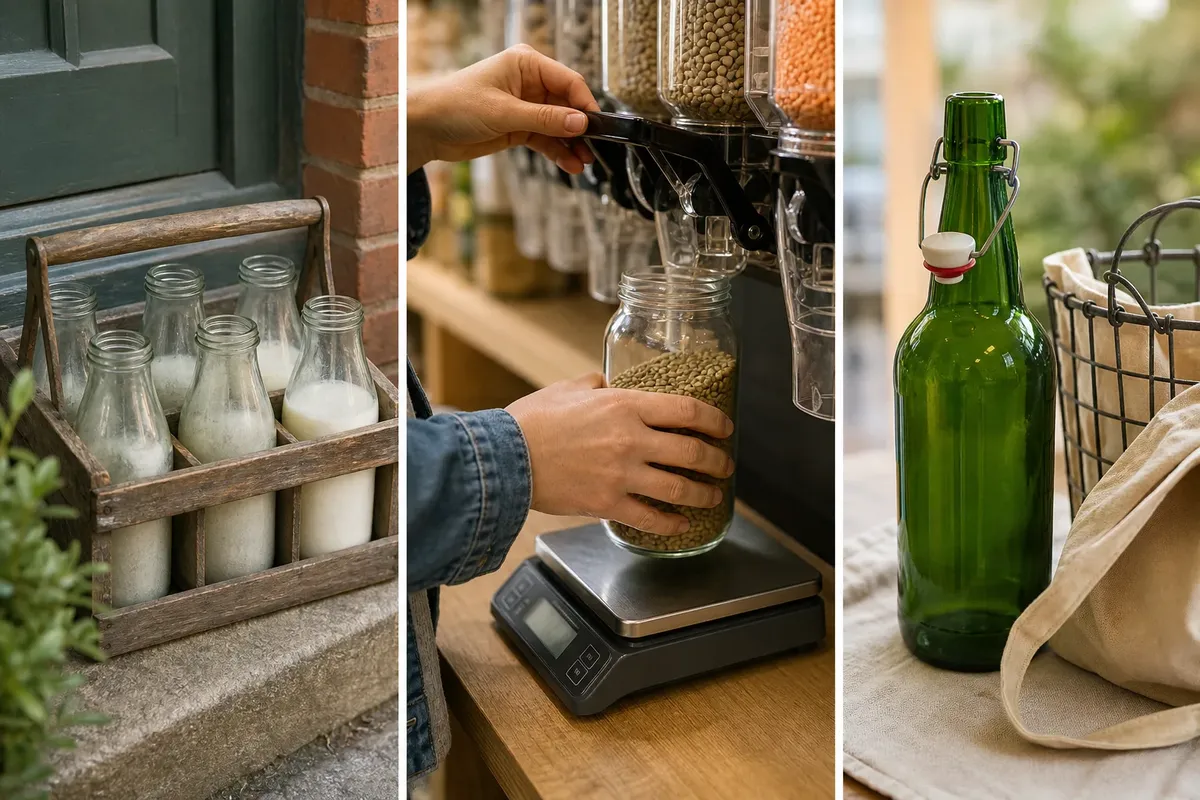
Returnable bottles and refill shops organise the same awkward question in different ways: who gets the empty container back into use? A milk round could collect bottles at the door, while a refill shop asks customers to bring a vessel with them. The shift is not a single, universal timeline; it is a change in how particular services divide the work.
How did doorstep milk delivery include bottle returns?
Where dairies delivered milk in reusable glass bottles, a household could leave empties out for collection on a later round. The delivery route connected the home with the dairy, so carrying bottles back did not necessarily require a separate customer journey.
The arrangement placed collection within a service already making regular visits. The dairy or its supply chain then had to manage the returned bottles. The practical detail matters: reuse was supported not just by a sturdy vessel, but by a route and an organisation prepared to take it back.
What changed when deposits linked bottles to a return?
A deposit scheme linked an eligible container to a customer’s transaction: the customer paid an amount associated with the bottle and could reclaim it by returning the container through the scheme. Unlike doorstep collection, this arrangement asked the customer to carry the empty to a participating seller or collection point.
The return was still organised by more than the customer alone. A retailer, supplier or collection network needed a defined role in receiving the bottle and passing it on. The model therefore moved the first leg of the journey to the customer while keeping a return route attached to the sale.
How did single-use packaging alter the transaction?
A packaged purchase can be completed without asking the customer to return its container. In some retail settings, that separated the act of buying from what happened to the packaging afterwards: the shopper took the product away, while its next destination sat outside the transaction.
This is a description of an arrangement, not a claim that every place abandoned returnable bottles or followed the same sequence. Different systems can coexist. The useful historical distinction is whether collection remained part of a service or sale, or whether the customer was left to find a separate route for the empty.
Why do refill shops put more of the journey with shoppers?
A refill shop can sell a product into a vessel the shopper brings. The shop sets its own rules for accepted containers and for filling; the shopper carries the vessel in, follows those instructions and takes it away. That differs from a managed bottle pool, where a supplier or retailer organises the return of standard containers.
Imagine Rowan has a clean jar and plans to buy lentils at a refill shop during an existing walk. Rowan checks the shop’s container rules, brings the jar, follows the staff’s weighing and filling process, and takes home the lentils in that vessel. The immediate result is a purchase using a jar Rowan already owns; the trade-off is that Rowan must remember to bring it again if the arrangement is to continue.
What do readers ask about returnable bottles and refill shops?
Who prepares bottles collected through a return scheme?
That responsibility depends on the scheme. Follow its stated instructions rather than assuming customers should clean or prepare a bottle for its next use.
Can a deposit bottle be used at a refill shop?
Not automatically: a deposit bottle belongs to a particular return arrangement, while a refill shop sets its own acceptance rules. Ask the shop before using a container intended for another system.
Why did doorstep collection suit milk delivery?
The delivery route already connected the dairy with households, so collecting empties could be included in the service. Customers did not need to make a separate return trip for each bottle.
What changes when shoppers bring their own containers?
Shoppers take on the immediate task of bringing a suitable vessel and following the shop’s process. The retailer still decides what it accepts and explains how filling works.
Which details distinguish one return arrangement from another?
A few concrete details show where the work sits. Check each one, then choose the action that fits the arrangement rather than treating every container as interchangeable.
- Collection route: Check whether the seller collects empties or requires drop-off. If collection is offered, leave the bottle as directed; if not, use a named return point or do not treat it as part of that scheme.
- Container ownership: Check whether the bottle belongs to a supplier’s pool or is your own. If it belongs to the pool, return it through that arrangement; if it is yours, use it only where the shop accepts it.
- Acceptance rules: Check the scheme or shop’s list of accepted containers. If yours is listed, follow that route; if it is not, ask staff or choose a listed vessel.
- Filling instructions: Check how the shop wants the container handled and weighed. If the process is clear, follow it; if it is unclear, ask staff before filling.
- Next destination: Check where the empty goes after use. If the arrangement names a return route, use it; if no route is provided, do not collect more containers for that purpose.
- Preparation duties: Check whether the scheme assigns customers any preparation task. If it does, follow those instructions; if it does not, return the bottle as directed rather than guessing.
It is not worth trying to make every old jar or bottle fit every system. A household jar may not qualify for a deposit return, and a deposit bottle may not be accepted for refilling. The arrangement’s rules, not a container’s appearance, determine its route.
How can one purchase show the practical trade-off?
Say Rowan has a clean jar holding no lentils and plans to buy two meals’ worth of lentils at a nearby refill shop during a walk already on the calendar. Rowan checks the shop’s rules, confirms that the jar is accepted, follows the weighing instructions and fills it with the amount needed for those meals. Rowan leaves with lentils in an existing vessel and a clear next action: bring the jar back if using the shop again.
Now suppose the shop does not accept that jar and the accepted alternative is at another shop requiring a separate journey. Rowan’s decision changes: ask whether another container is accepted, use the second shop if the extra trip fits the plan, or buy the packaged lentils instead. The observable difference is the route and vessel Rowan takes home, not a universal claim that one choice is always better.
What does the history of returnable bottles and refill shops reveal?
Doorstep collection, deposit returns and customer-carried refills place the return journey in different hands. A service may collect the empty, a customer may carry it to a collection point, or a shopper may bring a vessel for another purchase. The history of returnable bottles and refill shops is therefore also a history of how businesses and customers divided the effort of reuse.
To understand any arrangement, follow the container after its contents are gone: who receives it, and what route does it take next? That question keeps the comparison grounded in the actual service, rather than assuming that a reusable container can circulate without someone organising its return.
Keep exploring
What a Refillable Container Changes After the First Use
Refillable container choices depend on design and routine. Learn what to check so the container suits…

Borrow, Rent, or Own the Occasional-Use Tool?
Borrow, rent, or own an occasional-use tool with a clear way to weigh access, storage, availability…