Borrow, Rent, or Own the Occasional-Use Tool?
Borrow, rent, or own an occasional-use tool with a clear way to weigh access, storage, availability and realistic future use before deciding.
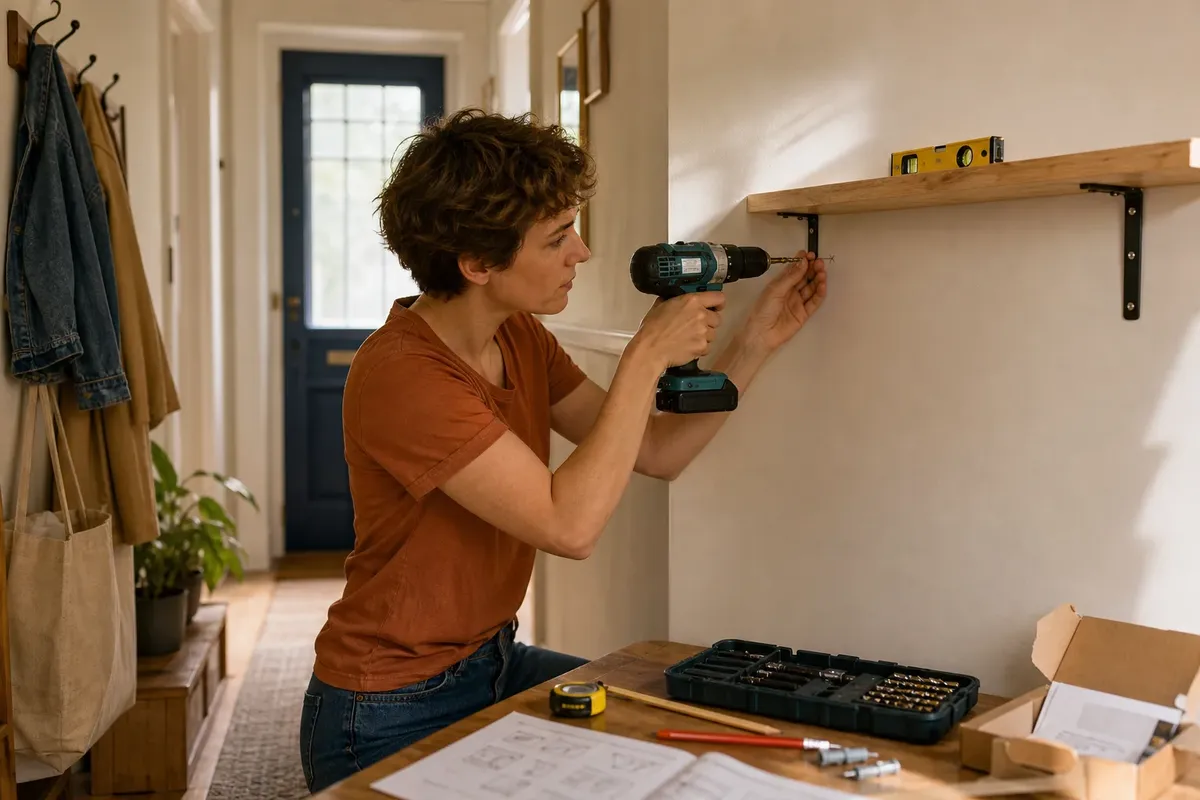
For an occasional-use tool, the best choice often depends less on its price than on whether it will be available when the job needs doing. Borrowing, renting and owning each use resources differently: one depends on a neighbour’s cupboard, another on a hire desk, and the third on your own storage space.
Say you live in a rented flat and want to put up a narrow shelf in a hallway. Imagine the job needs a cordless drill, a masonry bit may be required for the wall, and you have no drill at home. This invented situation is a useful way to compare the options without assuming that any one choice is always the low-impact one.
What does the shelf job actually require?
Before choosing how to get a drill, separate the job from the tool. A shelf kit may include fixings suited to plasterboard, brick or another surface, and those are not interchangeable. The wall material, shelf instructions and the building’s rules may affect what is appropriate.
For a straightforward job, you may need only a drill, the correct bit, a pencil, a tape measure and a spirit level. You might already own the hand tools. If the wall is unsuitable, or drilling could affect hidden services, pause rather than treating access to a drill as permission to proceed; ask the landlord or a qualified person where that matters.
That distinction keeps the decision in proportion. If the task needs a particular drill and bit for only a short time, acquiring a whole tool kit makes little sense. If the tool is needed repeatedly for several jobs, though, the convenience of keeping it close may matter more.
Could borrowing work without creating a burden?
Borrowing can be the simplest route when someone nearby has a suitable drill and is happy to lend it. It avoids buying another tool for a brief job, while also making use of something already in circulation. But “my neighbour owns a drill” is not quite the same as “a drill will be available at the right time”.
Check the practical details before relying on a loan: Is the battery charged? Are the needed bit and charger included? Can you collect it when the work is ready to begin? Does the owner expect it back by a particular time? A vague arrangement can turn a small shelf job into a series of messages and missed opportunities.
Borrowing also asks for care in return. Agree what comes with the drill, use it only for a task you understand, and return it clean and complete. If anything seems damaged or behaves unexpectedly, stop and tell the owner rather than passing the problem back unnoticed.
In this invented case, suppose the neighbour has a cordless drill but will be away on the day the shelf is due to go up. The tool exists nearby, yet its timing makes the loan a poor fit. The useful lesson is not to reject borrowing; it is to count dependable access, not just proximity.
When does renting make more sense?
Tool hire can suit a job with a clear start and finish, especially if the right model or attachment is not available through friends or neighbours. A hire desk may offer guidance on which tool matches the task, while the rental period encourages you to prepare before collection. Availability still needs checking: the item may be booked, and collection or return may take more time than expected.
Look beyond the headline hire charge when comparing options. Consider the journey, opening hours, deposit arrangements, return deadline and whether the required accessory is included. A tool that must be collected from across town can carry a larger practical burden than one borrowed around the corner, even if the rental itself is uncomplicated.
Renting can also make a specialist tool accessible without making you responsible for storing it indefinitely. That is useful when the task calls for a capability you are unlikely to need again. It is less appealing if the job is uncertain and you may need to extend the hire, or if a short access window would make careful work feel rushed.
For the shelf, imagine the local tool library has the right drill and bit available on a day when the renter can work. They book it, check the return terms and gather the shelf, fixings and hand tools beforehand. The expected result is access for the planned job without bringing another drill into a small flat.
Would owning it earn its place?
Owning a drill offers immediate access, which can be valuable when jobs arise at unpredictable times. It also means taking responsibility for storage, charging, upkeep and eventual repair or reuse. A tool in a cupboard is not automatically a useful purchase if the cupboard is crowded and the tool rarely leaves it.
Think about realistic future use, not an imagined catalogue of projects. Are there several repairs you already expect to do? Would the same drill suit them, or would each require a different attachment or level of skill? Is there a dry, secure place to keep it, along with its charger and bits?
For someone who regularly fixes furniture, assembles fittings or maintains a home, owning may make access easier and reduce repeated trips. For a renter who expects to move soon, has little storage and has one small job in mind, the case is weaker. Neither answer is universal: the pattern of use and the home’s constraints decide more than a broad rule about ownership.
There is also a difference between buying the cheapest available tool and choosing one that can be maintained. If ownership looks sensible, consider whether replacement parts, repair advice and compatible batteries are available, and whether the tool can be passed on if your needs change. A durable object still consumes materials, so keeping it useful matters as much as keeping it.
How should you compare the three options?
For this decision, a compact comparison is more useful than treating purchase, hire or borrowing as a moral scorecard:
- Borrow: best when a suitable tool is nearby, available at the right time and easy to return responsibly.
- Rent: best when you need a specific tool for a defined job and can manage collection, hire terms and return timing.
- Own: best when repeated, realistic use and convenient storage justify keeping the tool ready to hand.
Now apply that comparison to the invented shelf job. The neighbour’s drill cannot be borrowed when needed. A tool library has the right kit available on a workable day. The renter has no other planned drill jobs and little room to store a tool. On those facts, renting is the most fitting choice; if the library were unavailable, the next best option would depend on whether another reliable loan or hire source existed.
That result is not a verdict on drills or tool ownership. Change the starting point and the answer may change: a household with several planned repairs and a suitable storage spot could reasonably choose to buy, while a dependable loan nearby could make borrowing easiest. The decision follows access, use and space together.
What should you check before deciding?
How often will I really use this tool?
Count jobs you can name, rather than projects you might someday attempt. If future uses are vague, borrowing or renting keeps the decision open without adding another stored object.
Can I get it when the job is ready?
Confirm availability, collection arrangements and any return deadline before building a plan around a loan or hire. If timing is uncertain, consider whether a different day or a dependable alternative would work.
Do I have somewhere suitable to keep it?
Account for the tool, battery, charger and accessories, not just the main body. If storage would be awkward or expose the tool to damp, ownership may create extra trouble rather than convenience.
Is the tool appropriate for this particular job?
Match the tool and accessories to the task, and check the relevant product instructions and local requirements where they apply. If you are unsure about drilling into a wall or another safety-sensitive task, get qualified advice instead of improvising.
What is not worth the effort?
It is not worth making a complicated spreadsheet for a single shelf or spending days pursuing a distant loan to avoid a straightforward local hire. A quick check of realistic future use, storage and reliable access is usually enough to narrow the choice.
Nor does every borrowed tool need a formal agreement. A clear message about collection, included accessories and return is often sufficient; the aim is to respect the owner’s time and property without turning a small favour into paperwork.
What changes the decision next time?
After the job, note what actually shaped the choice. Did the tool arrive when needed? Was the hire window comfortable? Did you find yourself wishing you had one at home, or relieved not to store it? Those observations can guide the next decision without pretending that one occasion predicts every future need.
For an occasional-use tool, borrowing, renting or owning is ultimately a choice about access as much as possession. In the shelf scenario, renting fits because the tool is available for the planned job and the flat has little room for a seldom-used drill. For your own occasional-use tool decision, start with the next real task, then choose the least burdensome reliable way to get the right tool in hand.
Keep exploring

What a Refillable Container Changes After the First Use
Refillable container choices depend on design and routine. Learn what to check so the container suits…

Returnable Bottles and Refill Shops: How Reuse Arrangements Changed
See how returnable bottles and refill shops assign the work of reuse, from doorstep collection to…