A Low-Waste Picnic Without Special Gear
Plan a low-waste picnic around the route and meal, using household containers and only the tools you need to serve food and carry everything home.
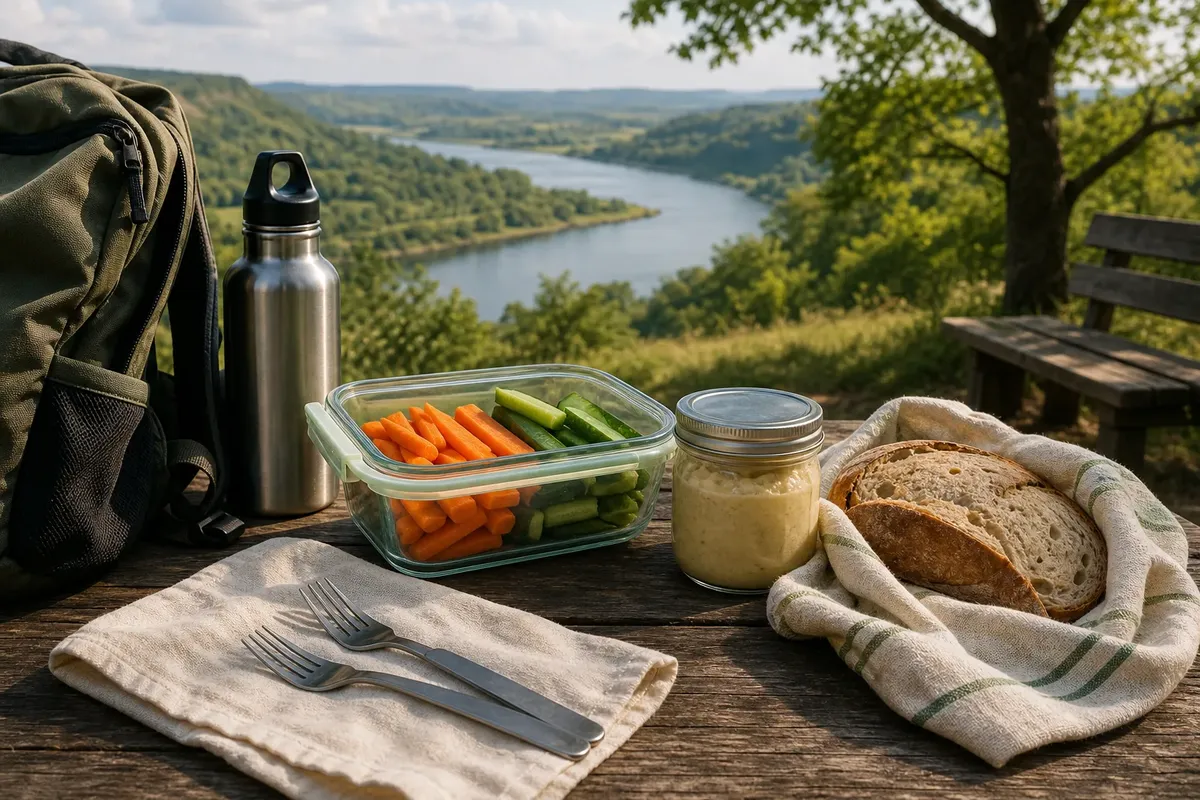
A low-waste picnic is easier to pack when the food suits the journey. Choose dishes that travel neatly, then use household containers and serving tools you already own.
What food suits a low-waste picnic?
Start with how you will eat. Bread, whole fruit, nuts and sturdy vegetables can be served with little fuss; a bean salad or dip may need a lidded tub and a spoon.
Consider how the food will fare on the route. Ripe fruit can bruise, crumbs can escape from pastries, and sauces can leak. Keeping foods with different textures apart may help, but elaborate individual wrapping is rarely worth the extra handling.
Which household containers and utensils do you need?
Use clean containers in good condition that suit the food. A lunch box can hold vegetables, while a lidded bowl or jar can carry a dip. Check that each lid closes securely before filling it.
Glass can be heavy or breakable in a crowded bag. A food tub already in use may be easier to carry. If a container will not close securely or sit upright, choose another suitable container or change the menu.
Match utensils to the meal: a fork for food that needs one, a spoon for a shared dip, or no utensil for food that can be eaten by hand. A clean cloth can serve as a napkin or wrap cutlery. Plates and extra tools can stay home if nobody needs them.
There is little point decanting every snack into matching jars just to make the bag look tidy. If a packet closes securely and you can bring it home, its original packaging may mean less washing and handling.
What should you check before packing?
Use these checks to make decisions for this outing, rather than building a special picnic kit.
- Food and weather: Check whether an item needs temperature control. If you can keep it at the required temperature, pack it; if not, choose a less perishable option and follow the food label.
- Container closure: Check that each lid closes securely with the intended food inside. If it does, use the container; if not, choose a suitable alternative or change the food.
- Bag stability: Check whether containers can stay upright in your bag. If they can, pack them securely; if not, use a more stable bag or leave out the spill-prone dish.
- Serving tools: Check which dishes need a fork, spoon or knife. If a dish needs one, pack that tool; if not, leave it behind or choose food that is easier to eat by hand.
- Cloth: Check whether one clean cloth can handle the planned napkin or wrapping job. If it can, take one; if not, bring a suitable cloth or simplify the task.
- Carry-home space: Check that the bag has room for containers, packaging and scraps after the meal. If it does, use it; if not, remove an avoidable item or choose a suitable larger bag.
How do you make a simple packing decision?
Say you are packing for two with bread, hummus, sliced carrots and bottled water. Your starting kit is a lunch box, a screw-top jar, two forks, a tea towel and a backpack. Put the carrots in the lunch box, the hummus in the jar and the bread in the towel; take the forks only if the meal needs them, and place the water bottle where it will not crush the food.
Set the jar upright in the backpack and lift the bag gently to see whether it shifts. If it stays upright and the lid is secure, keep the hummus in the jar; if it tips or the lid feels loose, switch to a secure food tub already at home or replace the dip with a less spill-prone food. The observable result is a clear choice: carry the dip in a stable container or simplify the menu, without buying new gear.
How can you make the journey and return easier?
Choose compact food and fewer containers when you will carry everything yourself. A bench may make a blanket unnecessary; for damp ground, an old washable cloth can serve instead.
In warm conditions, avoid food that needs careful temperature control unless you can keep it at a safe temperature. Follow food labels and ordinary food-safety guidance. If you are unsure whether a dish can travel safely, choose a less perishable option or seek advice from a qualified food-safety professional.
Before leaving, check for lids, cutlery, cloths and scraps. Bring suitable leftovers, packaging and scraps home. At home, wash the containers and cloths as usual and return them to their regular places.
What do people ask about a low-waste picnic?
What food travels well without individual wrapping?
Whole fruit, bread, sturdy vegetables and nuts are often simple to carry. Choose food that suits the weather, route and people eating, and use a lidded container for anything likely to spill.
Can ordinary household containers work?
Yes, if they are clean, in good condition and suitable for the food. Check the lid, weight and risk of breakage before packing glass for a crowded or long walk.
Do I need reusable plates and cutlery?
No. Take only the utensils the menu needs, and let people eat from their own containers when that is practical. Household cutlery can do the job without a dedicated set.
How can I avoid packing too much?
Assign a container and serving tool to each dish, then remove anything with no clear use. Leave enough room to bring home packaging and used items.
For a low-waste picnic, judge the plan by whether the food travels, serves and returns cleanly, not by whether the equipment matches. Keep the kit simple enough to carry comfortably, and make the container choice fit the awkward part of the route.
Keep exploring
What a Refillable Container Changes After the First Use
Refillable container choices depend on design and routine. Learn what to check so the container suits…
Borrow, Rent, or Own the Occasional-Use Tool?
Borrow, rent, or own an occasional-use tool with a clear way to weigh access, storage, availability…